
There is something unexpectedly intimate about sharing dessert.
Not the grand kind of romance people usually talk about. Not dramatic confessions or elaborate gestures. Just two forks reaching toward the same plate at the end of a meal, quietly agreeing that the moment should last a little longer.
Some people say love is spoken through words. Others find it in gifts or touch. But inside cafés, bakeries, and small dessert shops glowing softly at night, love often reveals itself in smaller ways. In the simple question: *“*Do you want to share this?”
Dessert changes the atmosphere of a table.
Meals are practical. Coffee can be routine. But dessert feels optional, emotional even. People order it when they are comfortable enough to stay longer. When conversation has softened. When nobody is rushing to leave yet. A shared slice of cake or a single bowl of shaved ice becomes less about hunger and more about presence.
It says, I enjoy being here with you.
That is why some of the most memorable relationship moments happen after the main course is already finished.
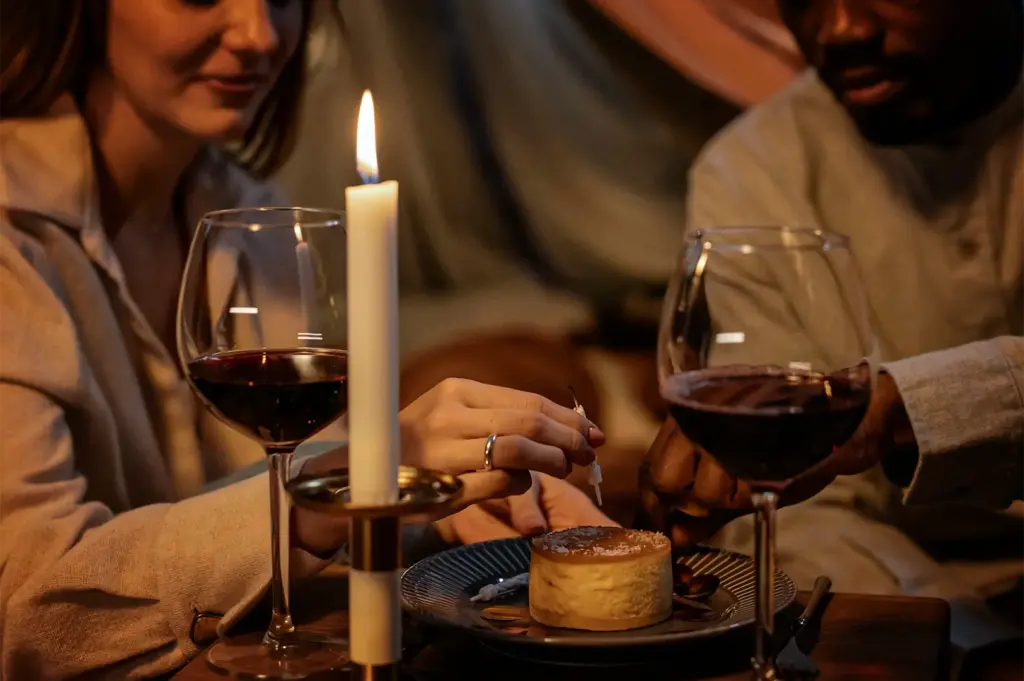
A couple leaning toward the center of the table to split a tiramisu. Someone carefully gave the last bite away without being asked. The quiet laughter that comes when both people reach for the same strawberry at the same time. These gestures are small, almost forgettable from the outside, but they often carry the tenderness people struggle to express directly.
Even in silence, shared desserts communicate care.
You notice who pushes the better half toward you. Who remembers your favorite pastry without asking. Who automatically orders two spoons. Love sometimes appears most clearly in these ordinary acts of consideration, where affection feels natural rather than announced.
Coffee shops witness this kind of love constantly.
You can see it on first dates filled with nervous smiles over cheesecake. In long-term couples who no longer need menus because they already know what the other person likes. In friendships healing quietly over warm pastries after difficult months apart. Dessert becomes the excuse people use to remain together a little longer before returning to the outside world.
And maybe that is part of its emotional power.
Sweetness slows people down.
For a few minutes, nobody is thinking about deadlines, unread messages, or unfinished responsibilities. Attention narrows into the present moment. The texture of the cake, the warmth of the café lights, the familiar face sitting across the table. Sharing dessert creates a pause in life that feels strangely safe.
Some memories stay vivid for years because of this.
Not because the dessert itself was extraordinary, but because of how someone looked while tasting it. Because of the conversation that happened between bites. Because happiness arrived quietly that evening, without needing to announce itself loudly.
People rarely remember every meal they have eaten.
But they remember shared desserts.
They remember the melted chocolate, the extra spoon, the accidental hand touch across the plate, the person who said *“*Take the last bite” and genuinely meant it.
Maybe that is why sharing something sweet can feel so personal.
It is never just about the dessert.
Sometimes, it is simply another way of saying I like this life more when you are part of it.