

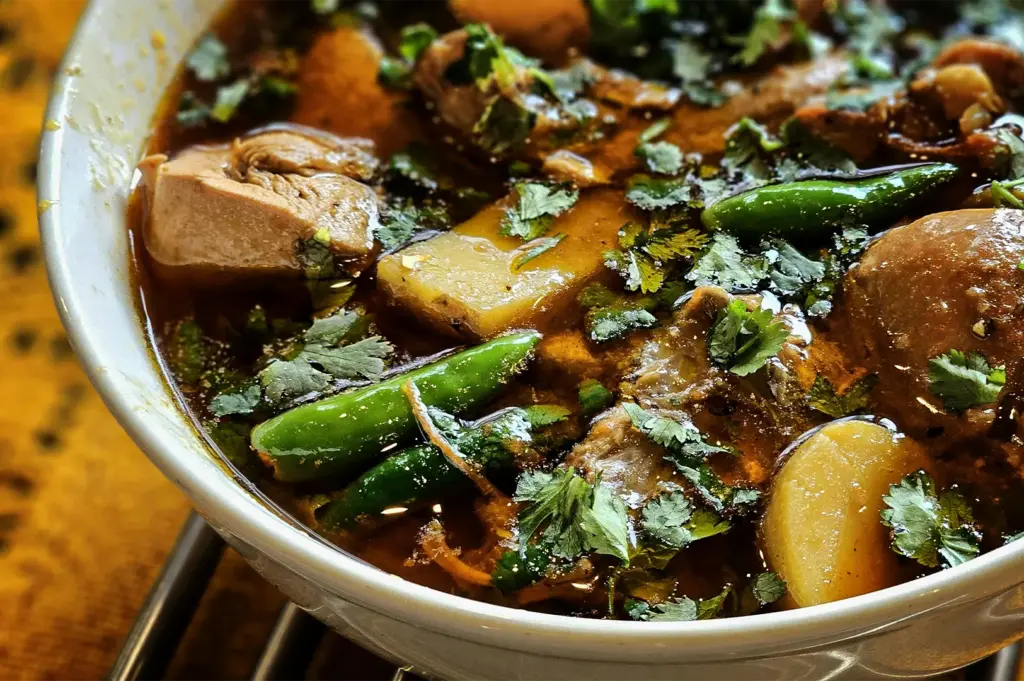
There is a moment, just before the first spoonful, when soup curry announces itself. The steam rises in a thin curl, carrying cumin and coriander and something deeper you can’t quite name. You lean in. That pause, curious, almost reverent is where the dish begins.
Soup curry is not the thick, clinging curry many of us grew up with. It arrives as a broth: fluid, fragrant, and far more generous than its name suggests. And for anyone who has yet to meet it, that distinction is exactly the point. This is a dish built for slowing down, for warmth without weight, and for the quiet pleasure of eating at your own pace.
The Spice Should Bloom
Good soup curry doesn’t hit you all at once. The spice unfolds gradually, blooming across the tongue rather than ambushing it. You taste the first layer, warm, earthy, rounded and then something brighter arrives a beat later. By the third spoonful, you’re chasing notes you missed at the start.
This slow reveal is part of why the dish rewards attention. It asks you to keep tasting, to notice how heat builds and softens. The spice isn’t there to overwhelm. It’s there to keep you interested, sip after sip.
Comfort Without the Heaviness
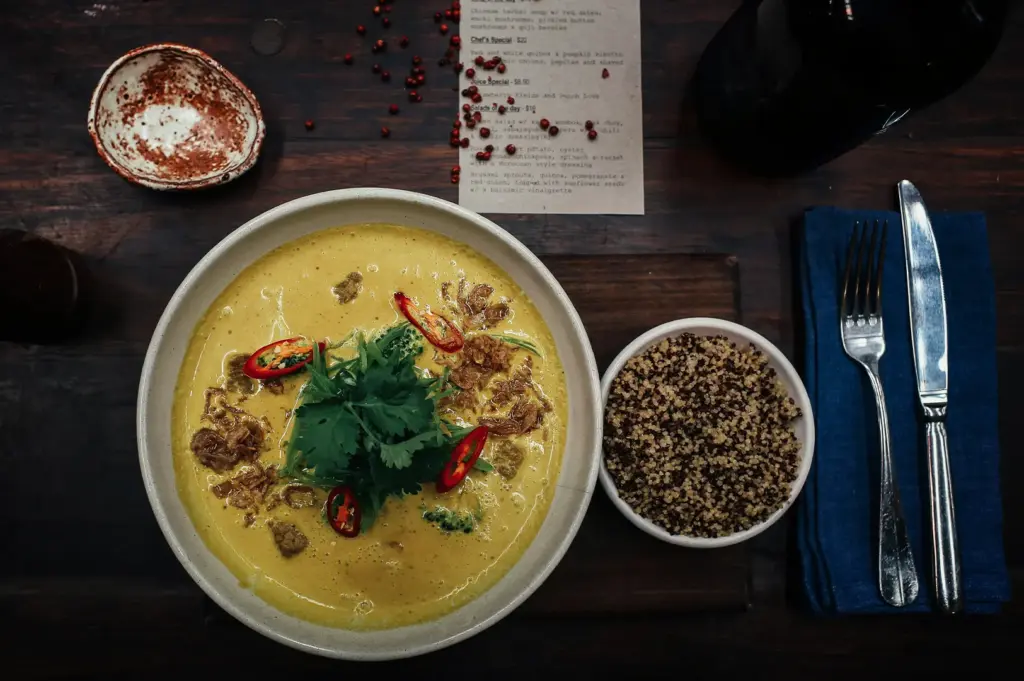
We tend to assume comfort food has to sit heavy in the stomach. Soup curry quietly disproves this. The broth is rich and deeply satisfying, yet it never weighs you down the way a dense bowl of stew might.
Part of this is the vegetables. They arrive whole and proud. A wedge of pumpkin softening at the edges, a stalk of broccoli still holding its shape, a soft-boiled egg waiting to be broken into the warmth. You eat slowly, and you feel full in the best sense: nourished, not stuffed. It’s a comfort you can carry lightly into the rest of your evening.
A Broth That Keeps Evolving
The most quietly remarkable thing about soup curry is how it changes as you eat. Spoon a little rice into the broth and the texture shifts. Crush the pumpkin into it and the sweetness deepens. Let the egg yolk run loose and the whole bowl turns silkier, richer, almost new.
No two spoonfuls are quite the same. The broth keeps evolving in response to you, rewarding small experiments and gentle tinkering. By the time you reach the bottom of the bowl, you’ve shaped a flavor that feels, in some small way, entirely your own.
A Reset at the End of a Long Day
There’s a reason soup curry feels right after a draining day. The warmth does something for you that a quick meal can’t. You sit down tired, and the steam and aroma begin loosening the tension before you’ve even picked up your spoon.
It is, in the truest sense, a reset. Each spoonful asks only that you be present for it. The day’s noise recedes, and for a little while, all that matters is the bowl in front of you and the slow rhythm of eating.
The Quiet Pleasure of Eating Alone
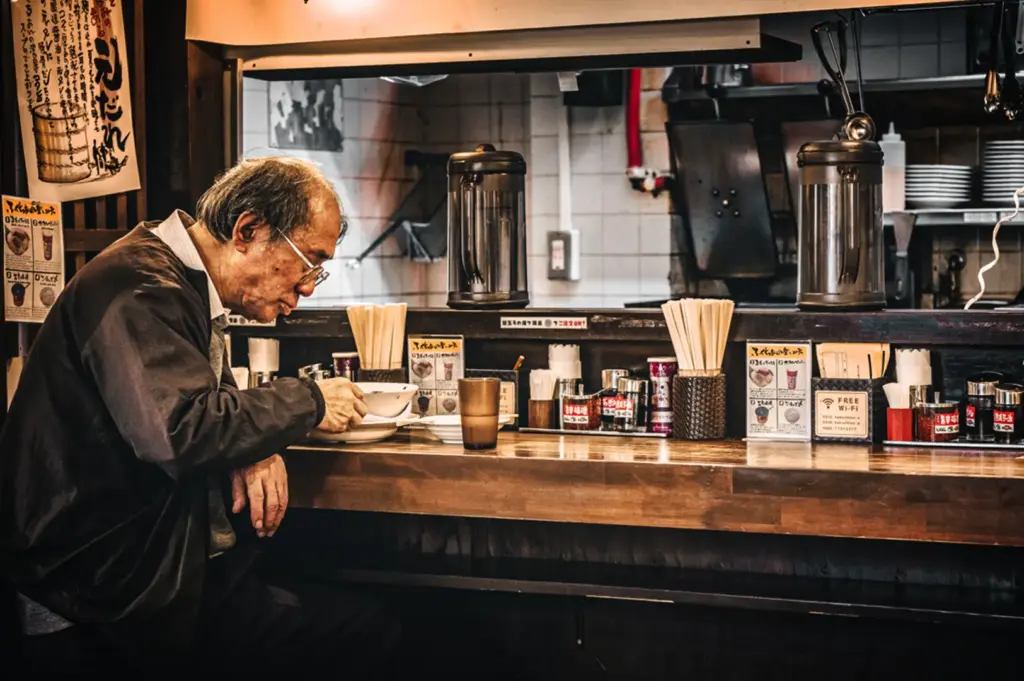
Soup curry may be the perfect companion for solo dining and I mean that as a compliment, not a consolation. There’s no need to share, no negotiation over what to order. The bowl is yours, the pace is yours, and the only conversation is between you and the changing broth.
Eating alone can feel like a small luxury when the meal invites it. You notice more. You taste more. You let the warmth do its quiet work without distraction, and you leave the table feeling, somehow, more settled than when you sat down.
That, in the end, is the real appeal of soup curry. It offers warmth, complexity, and calm in equal measure. A bowl that asks for your attention and gives back more than you expect. If you haven’t tried it yet, let the steam be your invitation.